

Project: The Radon gas
Radon is a gas that has no taste, odor, or color. It originates in the soil and in building materials such as cement and ceramics. Radon disperses in the air, and therefore every building contains some concentration of radon - including private homes. In most cases, radon levels in buildings are low and not harmful; however, long-term exposure to high concentrations of radon may have severe medical consequences. Detecting high radon concentrations enables residents to address the problem and protect their health.
The Radon Project is a citizen science initiative designed to create collaborations among teaching staff, students, and academic researchers.
The Radon Survey Initiative was developed through a collaboration between the TCSS Center of Excellence and the Faculty of Civil and Environmental Engineering at the Technion – Israel Institute of Technology, integrating pedagogy, research, and data inquiry. Students are given the opportunity to participate in a unique and authentic environmental research project while contributing nationally to society and the community: both by making important information about the “radon problem” accessible to the public through raising awareness about radon gas, its dangerous effects, and risk-reduction methods, and by measuring radon levels in their residential environments.
At the conclusion of the project, and with the aid of the survey, it will be possible to create a national radon map for the State of Israel, which may enable referrals to the appropriate authorities for further treatment and intervention. In cases where high concentrations of radon are identified in places where students or their relatives live, longer-term monitoring will be conducted, which may potentially save lives.
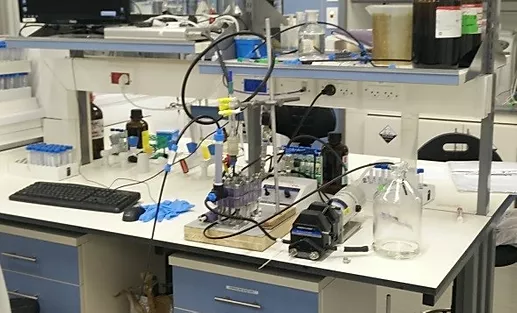
The purpose of the instructional unit accompanying the initiative is to support teachers and schools in participating in the Radon Survey Initiative while learning about a topic of critical importance to public health—namely, the monitoring of radon gas. The implementation of the program in schools is intended to improve students’ inquiry skills around an authentic and relevant issue. During the program, students are introduced to radon gas, its characteristics, and its dangers, and they also participate in monitoring the gas (each student in their own home) through the placement of an activated charcoal column (vial) that absorbs the gas. Extraction of the gas from the column is carried out in a certified laboratory at the Technion – Israel Institute of Technology, and students receive the results of the measurements they conducted. The aggregated results of all students in the class are also sent to the teacher.
Students may also conduct inquiry projects and build upon what they learned in the unit through personal research questions, which may lead to classroom-based or individual data inquiry using CODAP, a tool that enables informal data exploration through visual methods without requiring prior knowledge of calculations or statistical equations. Students are able to investigate data collected either by their classmates or by students throughout the country.
Scientists: Konstantin (Kosta) Kovler and Andrey Shishkin, Ayelet Baram-Tsabari (Technion – Israel Institute of Technology), and Danny Ben-Zvi and Elin Perry (University of Haifa).
For further details and participation in the project:
radon.tcss@gmail.com