

Project: Irises
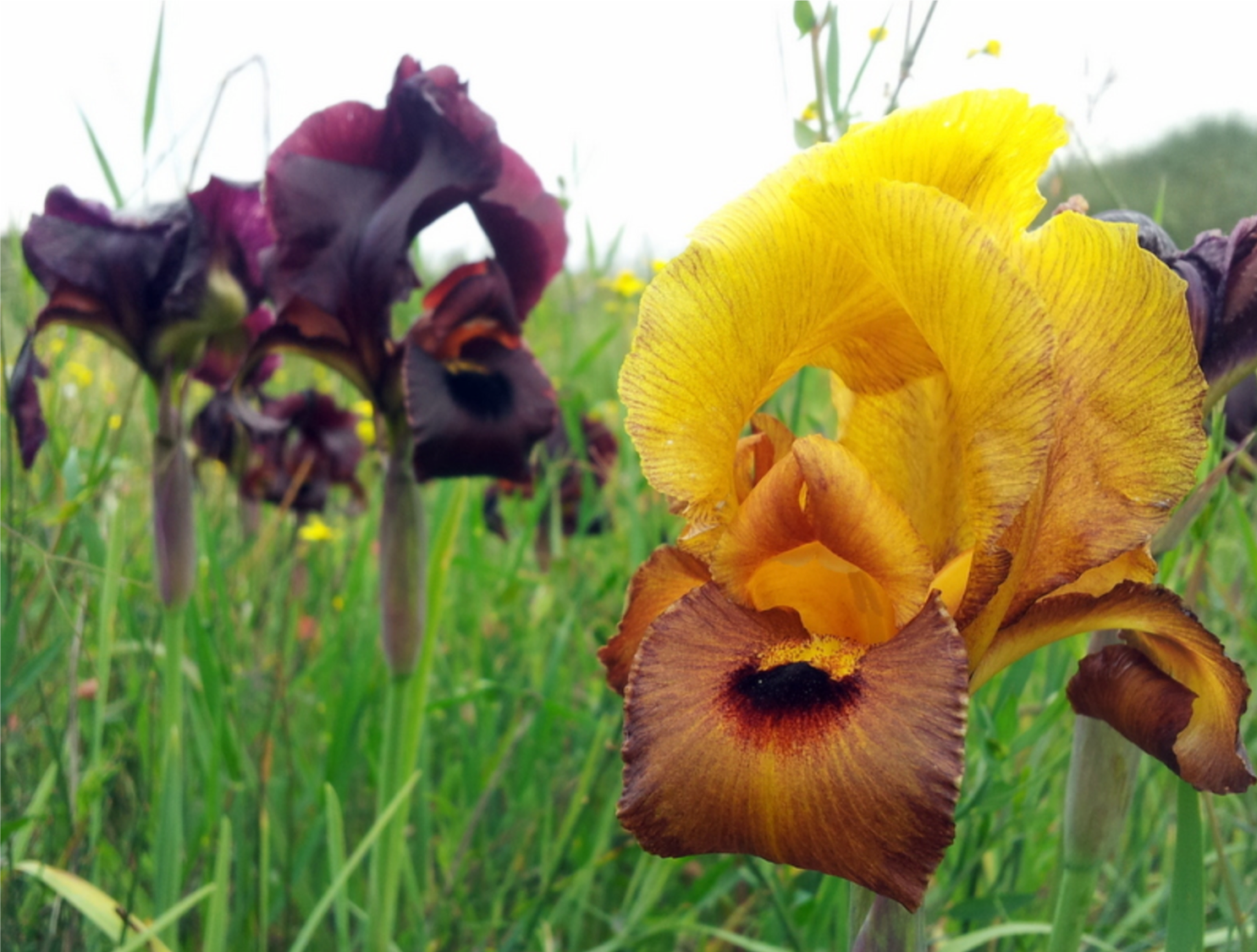
The Iris Project was initiated by Hila, a science and biology teacher at WIZO Hadassah School near Even Yehuda. The project serves as an example of a citizen science inquiry that emerged from local educational practice. Hila was searching for an engaging topic for a citizen science research project במסגרת inquiry-based science instruction for ninth-grade students. Together with representatives from the Society for the Protection of Nature in Israel, she identified three small populations of the coastal iris (Iris atropurpurea) near the school. The iris is an endemic species of the Sharon region’s hamra soils and is considered endangered. They observed an interesting phenomenon: only one of the three populations produced fruit. A hypothesis was raised that the presence of honeybees from nearby apiaries was preventing the flowers from developing into fruit, and this became the focus of the research project.
Hila designed a curriculum for the students that included familiarization with the irises and their habitat, engagement with the topic of biodiversity and its importance, introduction to the field of citizen science, examination of previous studies conducted on irises, practice in formulating research questions, a field trip to the iris reserve in Netanya, meetings with an iris researcher, and experience in data collection. The students subsequently went into the field, formulated research questions, collected data, and analyzed their findings.
During the course of the activity, the teacher and students discovered that some of the irises were at risk due to the expansion of an industrial zone. Under the guidance of the Israel Nature and Parks Authority and an iris researcher from Tel Aviv University, they carried out a transplantation of the irises, thereby contributing to nature conservation in addition to gaining experience in ecological field research.
Related Stories (1)